Course Overview
Art, Design and Media is designed to foster a creative, critical and experiential approach to art, design and media practice with embedded general English and English for specific purposes. Students are encouraged to experiment with different creative methods, test ideas and engage in a process of critical reflection through creative approaches. The course supports students towards informed career choices, with awareness of their own creative strengths and knowledge of creative career pathways.
Main Study Themes
Media and Communication
Introduction to the meaning, importance and use of a number of fundamental concepts within the broad fields of media analysis and production to understand how meaning within media objects has been produced, consumed and interpreted.
Digital Storytelling and Media Design
Investigate the effects of immersive forms of digital media on storytelling by exploring areas such as augmented reality, pervasive and immersive media, locative media and interactive storytelling.
Creative and Critical Digital Practice
Develop the core skills and knowledge necessary to effectively produce, distribute and analyze a range of digital media. Examine how people, ideas and content flow through digital environments and use this knowledge to develop a range of digital media artefacts. Experiment with different forms of multimedia content, including digital video, sound, web and other forms.
Course Information
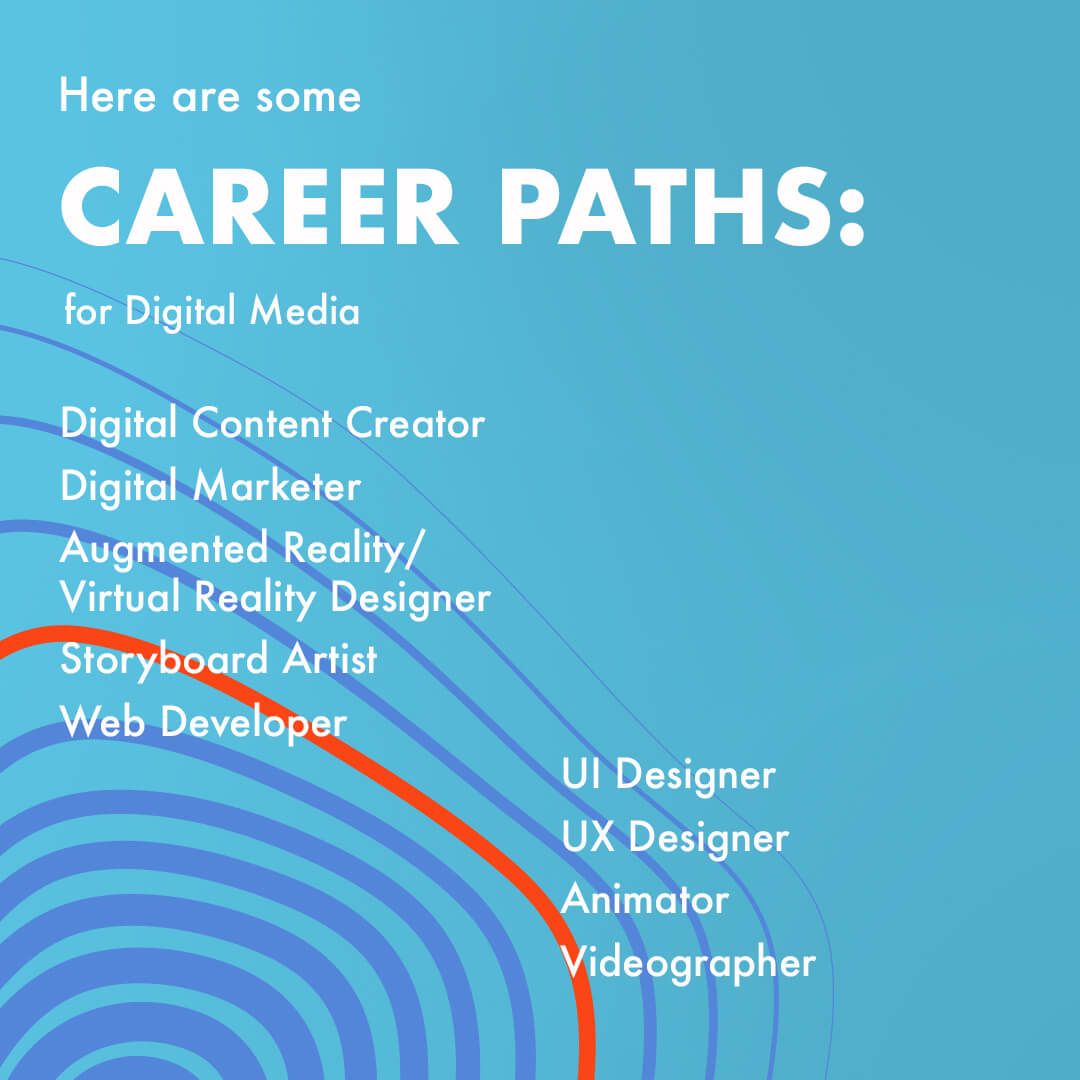
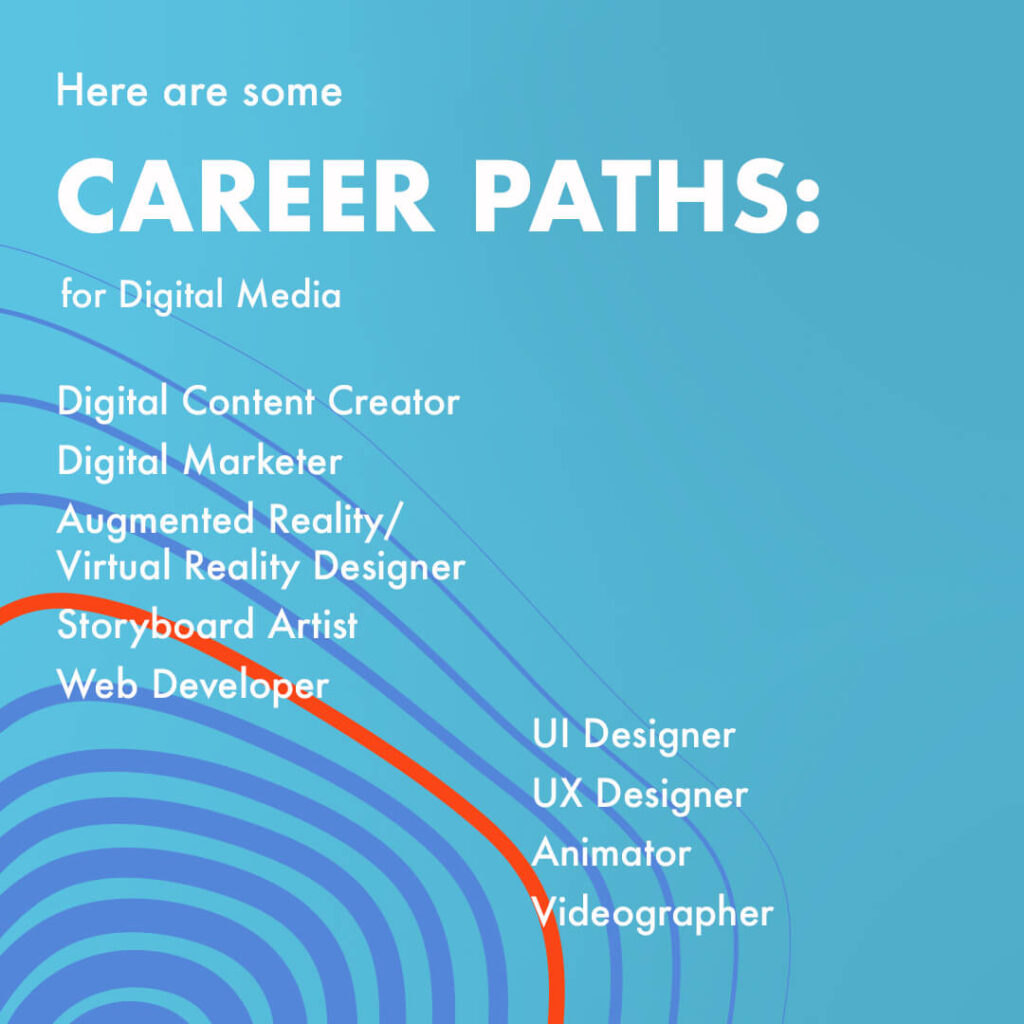
Merging the creative with the technical, the BA Digital Media course prepares students for careers in a variety of digital media fields, such as immersive production, web and mobile app development, and digital marketing. Students will experiment with a range of technologies, practices, processes and ideas designed to develop their skills and understanding as reflective and sustainable practitioners in the field of digital media design, research, production and professional practice.
It takes a transmedia approach: enabling students to become familiar with a range of critical and creative media tools and technologies to inform their practice and understanding. The responsive curriculum is therefore well placed to address the rapid developments concerning the impact of new and emerging media technologies and broader changes to the media and communications landscape. The BA Digital Media will enable students to understand the scope and impact of digital technologies and practices in the context of various digital media industries. It will develop their creative thinking and experimentation capabilities in order to allow them to create innovative new applications of digital media practice.
Course Specification
Access the full course details, including module descriptions, learning outcomes, and assessment methods.
- Beyond the Digital Revolution: Contexts
- Transmedia Storytelling and Immersive Design
- Hacking the Immersive Pipeline
- Digital Marketing and Content Creation
- Engaging in Professional Practice
- Creative Collaboration
Students can choose 1 module from below:
- Immersive Production and Experimental Praxis
- Creative Application Design and Development
- A credit/notional hour is the formal name for the estimated hours that are expected that a student would need to complete a module
- 1 credit is equal to 10 notional hours, so 20 credits are equal to 200 notional hours, The 200 hours includes time in lectures, tutorials, preparing for your lectures, assessments as well as your own personal revision and studying that you would do
- In reality, you might actually go above and beyond the expected notional hours, in particular if your degree requires a lot of independent learning you would most likely exceed the predicted hours
- In the UK system each semester is 60 credits worth which is equivalent to at least 600 hours of study in one term. This is approximately equivalent to 8 hours of study a day